
congressman Buddy Carter is Big Pharma’s Fiercest Friend.
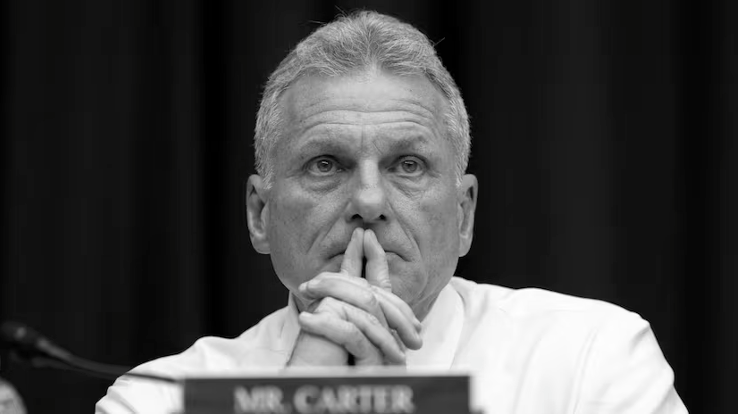
Congressman Buddy Carter (R-GA-01)
Pill-Paid Politics. The Carter Way.
Congressman Buddy Carter is one of Big Pharma’s fiercest friends. The Georgia Republican and pharmacist likes to tout himself as a watchdog for patients. However, the money trail suggests he’s guarding the industry’s profits, not consumers’ wallets.
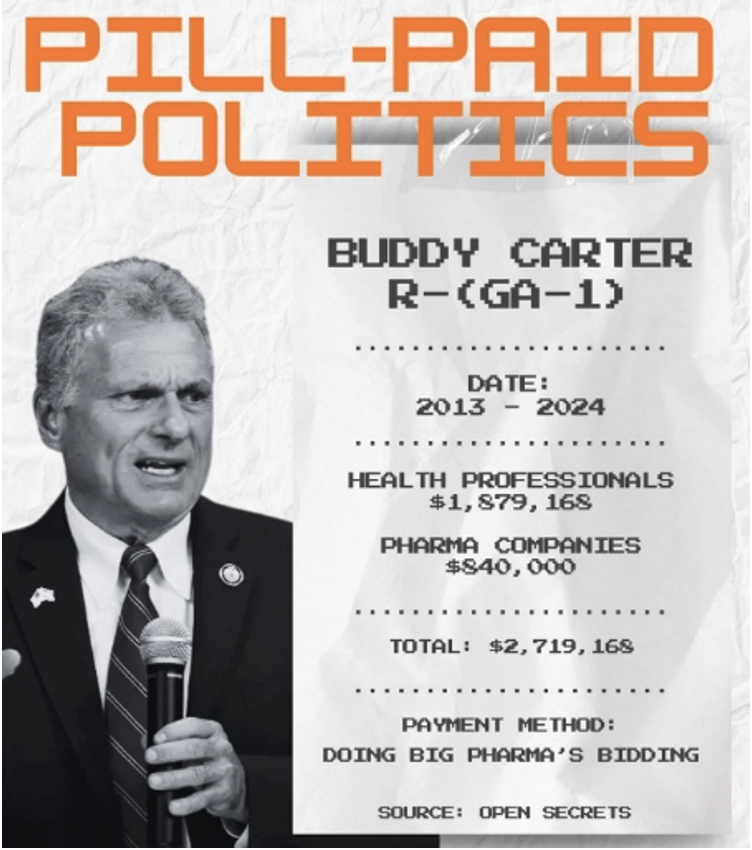
Big Pharma has provided Congressman Carter with a steady flow of industry cash over several campaigns. In the 2021–2022 election cycle, Carter took $138,577 from pharma donors. The following election cycle, 2023–2024, Carter raked in an astonishing $249,099 from the pharmaceutical and health products industry. He’s accepted over $2,719,168 from the pharma and healthcare industries to date.
Why should you care?
As a member of Congress, Carter is somehow expected toregulate the same drug companies and trade groups that have been bankrolling his campaigns. Carter is a magnet for industry money because he sits on the House Energy and Commerce Committee, one of the most powerful committees in Washington. The Energy and Commerce Committee holds the keys to America’s drug policy, overseeing the FDA, Medicare, Medicaid, and every link in the pharmaceutical supply chain. This is exactly where Big Pharma wants its friends.
Congressman Buddy Carter’s entire record is built on a glaring conflict of interest. His defenders argue that as a pharmacist, he understands the healthcare system’s complexities and pushes for reform. However, the Congressman was no small-town pharmacist; he was a business tycoon who owned Carter’s Pharmacy, Inc. for 32 years. It’s no wonder Congressman Carter is currently one of the wealthiest Members of Congress. It’s even less surprising that every healthcare policy he advances seems to shield drugmakers and distributors while leaving consumers out in the cold.
The Gift that Keeps on Giving.
The Congressman was elected to fight for ordinary Americans struggling to afford healthcare, yet he sides with the companies driving up healthcare costs. For example, his 2025 PBM Reform Act conveniently redirects scrutiny away from drugmakers who are inflating drug costs and lays the blame elsewhere. At the start of 2026, pharma companies responded to the affordability crisis by increasing list prices on 350 different drugs, 100 more than they increased prices on in 2025. PhRMA, the industry’s primary lobby group, rushed to endorse his bill and publish glowing support. He helps his industry friends avoid any meaningful accountability for the high list prices they set at the expense of everyday Americans.
What can we do?
Americans are done watching lobbyists and corporate donors call the shots in Congress. This March, TPAP is launching a Congressional Pledge to fight back. Lawmakers who sign our pledge will make a commitment to reject Big Pharma’s money and put patients first. It is time to fight back. If our representatives will not stand up to Big Pharma, voters will!
