
Who’s really hiking drug costs?
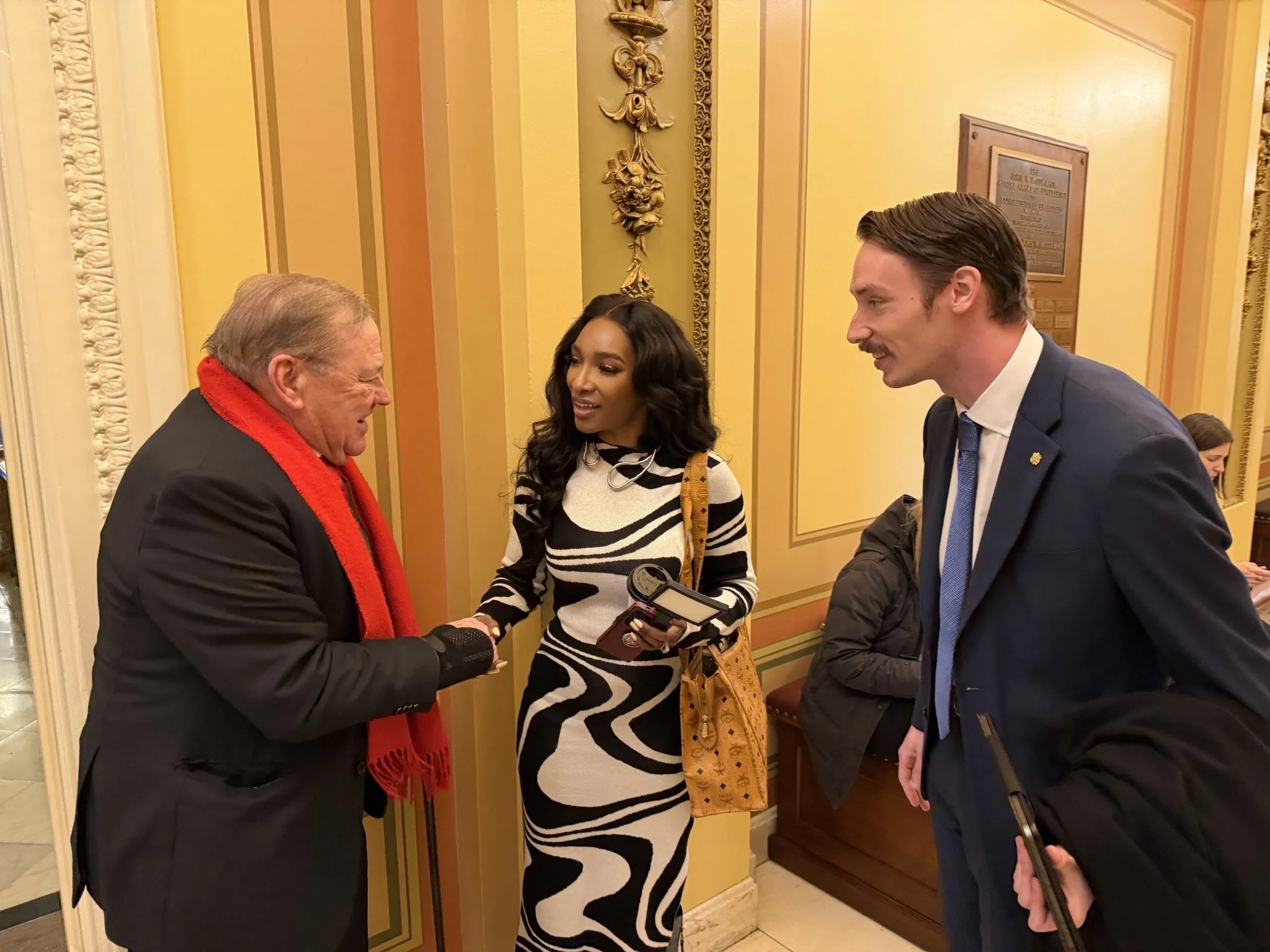
(L to R) Rep. Neal Dunn (FL-02) meets with TPAP’s Naja Hall and Ryan Walker on Capitol Hill on February 11th.
The Pharma Accountability Project was back on Capitol Hill yesterday to meet with Representatives during the House Committee on Energy and Commerce Health Subcommittee hearing, “Lowering Health Care Costs for All Americans: An Examination of the Prescription Drug Supply Chain.”
This was the second hearing in the Committee’s series on the affordability crisis in the prescription drug supply chain. At the top of the chain are pharmaceutical manufacturers that research, develop, and produce drugs and therapies. These companies then set the wholesale acquisition cost, also known as the list price. Manufacturers will claim that high drug prices are necessary to offset the costs of R&D, but have recently shown that they can dramatically cut prices overnight, proving the power was always in their hands.
So, I was confused watching Congressmen take turns asking the witnesses why America’s drug prices were so high when the culprits were sitting in the room! Among the nine witnesses called before the Committee was Lori M. Reilly, CEO of PhRMA, the trade group that lobbies on behalf of drug manufacturers. According to Open Secrets, PhRMA lobbied 73 bills across the House and Senate in 2025 to protect their clients from regulation. In 2025 alone PhRMA spent $38,185,00 on lobbying expenditures.
“Some have spent millions and millions of dollars to convince you that the ones who made drugs cheaper, PBMs, are the problem… It's a remarkable achievement, really, and I tip my cap to my pharma friends on a master class of persuasion that will be taught to lobbyists.”
--David Marin, President and CEO, Pharmaceutical Care Management Association.
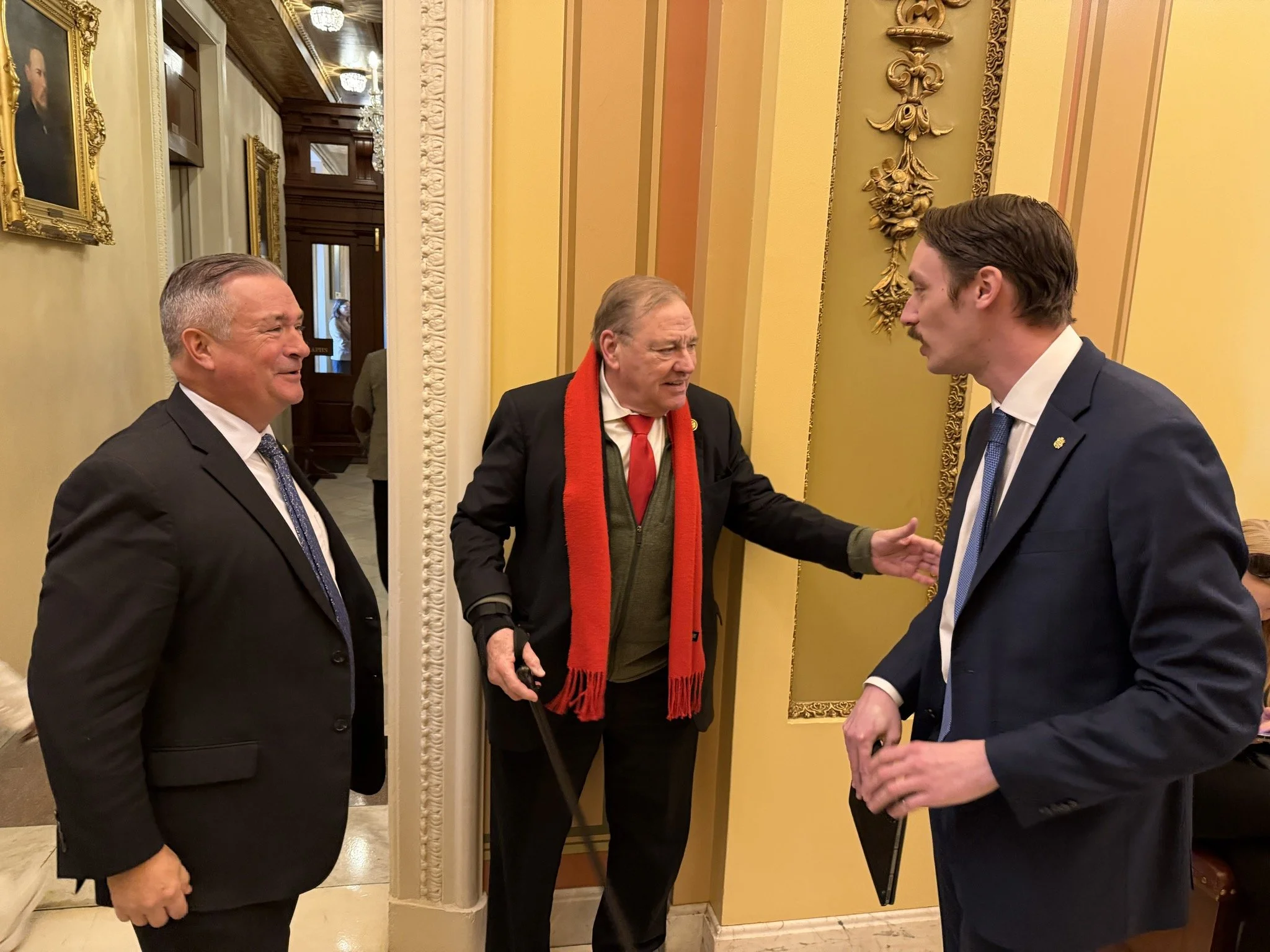
(L to R) Rep. Don Bacon (NE-02) and Rep. Neal Dunn (FL-02) meet with TPAP’s Ryan Walker.
Pharma’s Super Bowl Spending Spree
But Big Pharma isn’t just working in the halls of Congress, it’s also happening in your living room. Drug companies together poured an estimated 48 million dollars into Super Bowl ads while patients around the country ration medications and skip refills because of cost. Airing a 30‑second Super Bowl ad cost $8–10 million, with full campaigns reaching $15 million or more. Novartis spent $16 million for its 60-second “Relax Your Tight End” ad promoting blood-based screening for prostate cancer.
The Super Bowl may be over, but drug manufacturers are just getting started. These companies are expected to spend about $6 billion on year‑round advertising, disease awareness campaigns, and a constant drumbeat of sponsored content. Pharma’s media machine shapes what stories get told about high drug costs and who gets blamed. They’ll fund experts and key opinion leaders who’ll appear on cable shows, podcasts, and online platforms to blame insurers, hospitals, or even patients themselves for high drug prices!
For TPAP, this week is a clarifying moment: if manufacturers can afford multimillion‑dollar Super Bowl ads, then they can afford to lower prices.
