
Is this the end of costly and harmful pharmaceutical advertising?
BY CHRISTOPHER SHAYS AND RICHARD SWETT, OPINION CONTRIBUTORS
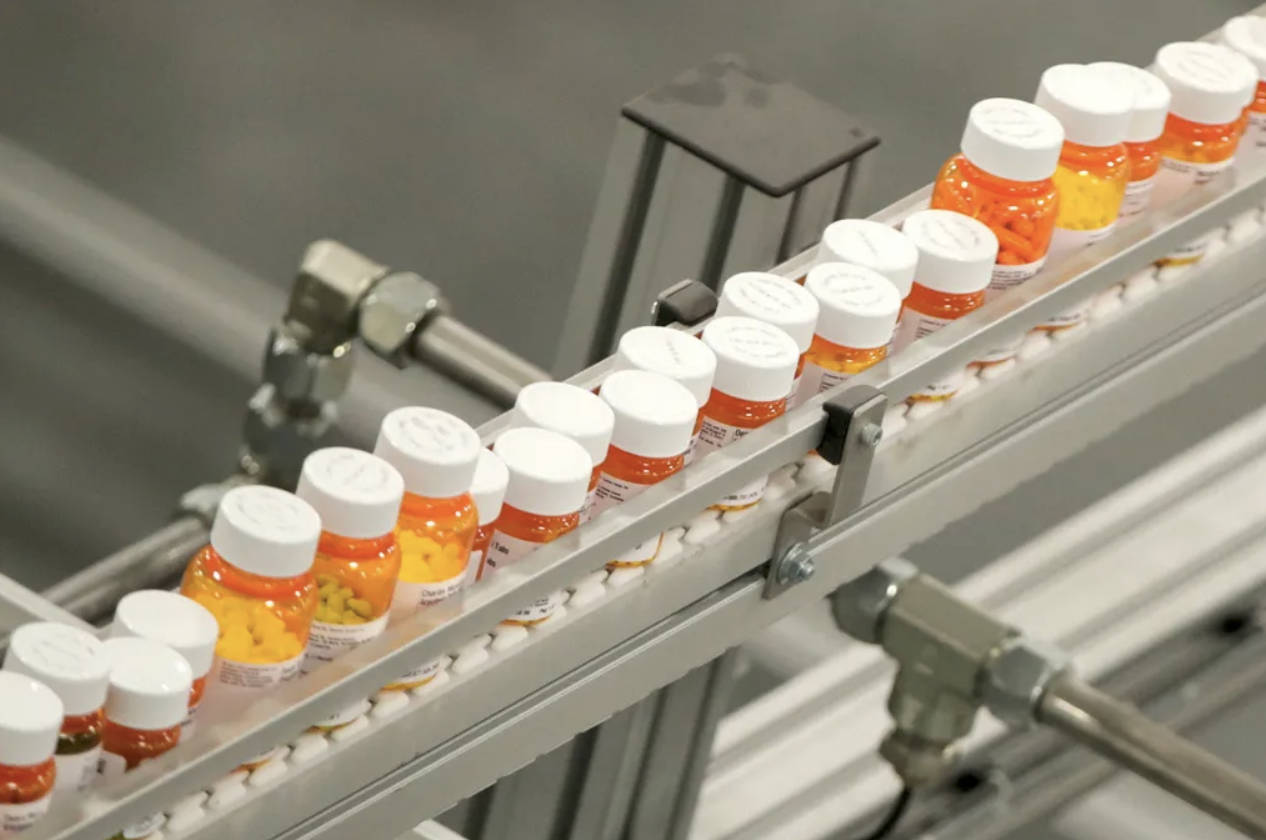
FILE – Bottles of medicine ride on a conveyor belt at a mail-in pharmacy warehouse in Florence, N.J., on July 10, 2018. (AP Photo/Julio Cortez, File)
For more than two decades, Americans have lived with a peculiar feature of their healthcare system: television commercials in which smiling actors jog through sunlit parks, while a voice rapidly lists side effects ranging from nausea to death. Direct-to-consumer pharmaceutical advertising has become so normalized that it is easy to forget how unusual it is globally.
The United States is effectively the only country in the world that allows this practice. Most advanced nations have concluded that prescription drugs are fundamentally different from ordinary consumer products, and that medical decisions should be guided by physicians and evidence — not billion-dollar advertising campaigns designed to manufacture demand.
At long last, this expensive and harmful practice may finally be under real political pressure.
Across the country, a new bipartisan skepticism is emerging around the role of pharmaceutical advertising in shaping both healthcare costs and medical decision-making. These efforts are not confined to one ideological camp. They reflect a growing consensus across the left, right, and populist movements that the current system is distorting both medicine and markets.
At the federal level, independent Sens. Bernie Sanders (Vt.) and Angus King (Maine) have introduced legislation that would ban prescription drug advertising nationwide. At the same time, Sens. Josh Hawley (R-Mo.) and Jeanne Shaheen (D-N.H.) have advanced bipartisan legislation to eliminate the federal tax deduction for pharmaceutical advertising expenses, ending a taxpayer subsidy for drug marketing.
Drug ads have also become a hot-button in at least one high-profile campaign. In the Maine U.S. Senate race, insurgent candidate Graham Platner has publicly endorsed ending direct-to-consumer pharmaceutical advertising as part of a broader effort to reduce healthcare costs and restore public trust in medicine.
States are also getting tough on drug ads. In Maryland, legislators have introduced bills that would deny state tax deductions for pharmaceutical direct-to-consumer advertising. Rather than attempting to prohibit advertising outright, the Maryland approach asks a simpler question: Why should taxpayers subsidize pharmaceutical marketing in the first place? That framing may ultimately prove both politically and legally compelling.
Texas lawmakers, meanwhile, have proposed a more aggressive approach that would prohibit direct-to-consumer pharmaceutical advertising within the state. Such a measure would almost certainly face First Amendment challenges, but its introduction alone demonstrates that policymakers are increasingly willing to challenge what was once viewed as untouchable.
Taken together, these developments suggest that what was once considered a fringe issue is rapidly entering the mainstream policy conversation.
The economic stakes are enormous. Pharmaceutical companies spend an estimated $8 to $10 billion annually on direct-to-consumer advertising in the U.S., much of it concentrated on television and increasingly digital platforms. Those costs do not disappear; they are ultimately built into the price of medications and insurance premiums paid by American consumers.
Critics argue the damage goes beyond cost. Direct-to-consumer advertising reshapes the relationship between doctors and patients in ways that are difficult to reverse. Patients increasingly arrive at appointments requesting specific branded medications they have seen advertised, sometimes before diagnosis is complete or alternative treatments are fully considered. Physicians, in turn, may face explicit or implicit pressure to accommodate those requests even when cheaper, older, or more effective alternatives exist.
The result, according to critics, is higher healthcare costs for consumers who are often steered toward newer and more expensive branded drugs that may offer little advantage over cheaper or equally effective alternatives.
Supporters of reform further argue that direct-to-consumer advertising undermines informed consent rather than enhancing it. While advertisements are legally required to disclose side effects, the format and framing are strictly promotional. In healthcare, where decisions often involve life-altering tradeoffs, this blending of marketing and medicine raises profound ethical concerns.
Polling conducted by The Pharmaceutical Accountability Project suggests that many Americans are receptive to reform, with substantial numbers expressing discomfort with pharmaceutical advertising and support for stronger restrictions or outright bans. The public increasingly understands that prescription drugs are not ordinary consumer goods and should not be marketed like soft drinks or luxury cars.
The pharmaceutical industry will surely go on offense to protect their advertising. One of their central arguments will be grounded in free speech protections. Drug companies will contend that advertising is constitutionally protected commercial speech and that consumers benefit from greater awareness of treatment options.
But commercial speech has never been absolute. The government already regulates advertising in areas where misleading or manipulative claims can produce significant public harm, particularly in matters involving health and safety. In this view, prescription drug advertising occupies a uniquely sensitive category because it influences life-and-death medical decisions while operating through inherently persuasive communication.
The political momentum, however, is becoming increasingly difficult to ignore. What once seemed like an untouchable feature of the healthcare landscape is now being openly questioned in Congress, in state legislatures, and on the campaign trail.
The central question is not whether pharmaceutical advertising is in the public interest. It clearly is not. The question is whether the American people — already facing a severe healthcare affordability crisis — will continue to tolerate the costly and harmful practice of direct-to-consumer drug advertising.
Richard Swett (D) served as the U.S. representative for New Hampshire’s 2nd District from 1991 to 1995. He also served as the U.S. Ambassador to Denmark from 1998 to 2001. Christopher Shays (R) served as the U.S. representative for Connecticut’s 4th District from 1987 to 2009.
